◆ KINAMIX / REPRESENTATIONS// opening question01 / 16
A research talk · Edward Kennedy

Guidance
Beyond Language

Wisdom, representations, and a new control surface for generative models.
A wide Art Nouveau archway opening onto a strange moonlit landscape

2026 / KINAMIX

◆ KINAMIX / REPRESENTATIONS// systems of specialists02 / 16
Many models, one system

The Future Is Multi-Model

Agents are making it practical to use many specialized models as one system.
Route each task to the right model
Personal agentreasoning, memory, planning, communication
Firewall / security modelinspect inputs and outputs for threats
Trading agentcombine market models, evaluators and strategy models
Vision / audio modelssee, hear and generate different media
Small specialist modelsfast, cheap decisions where a frontier model isn't needed
One output. Many models.
A council of specialized alien figures gathered around one table
◆ KINAMIX / REPRESENTATIONS// systems within systems03 / 16
Human systems

After all, aren’t we multi-model systems too?

We already make sense of ourselves through specialized ways of thinking, feeling, sensing, and deciding.
Two modes of cognition
Left Brain+Right Brain
Different modes. One person.
Three ways of knowing
Head+Heart+Guts
Different signals. One decision.
Many specialized systems.
One integrated whole.
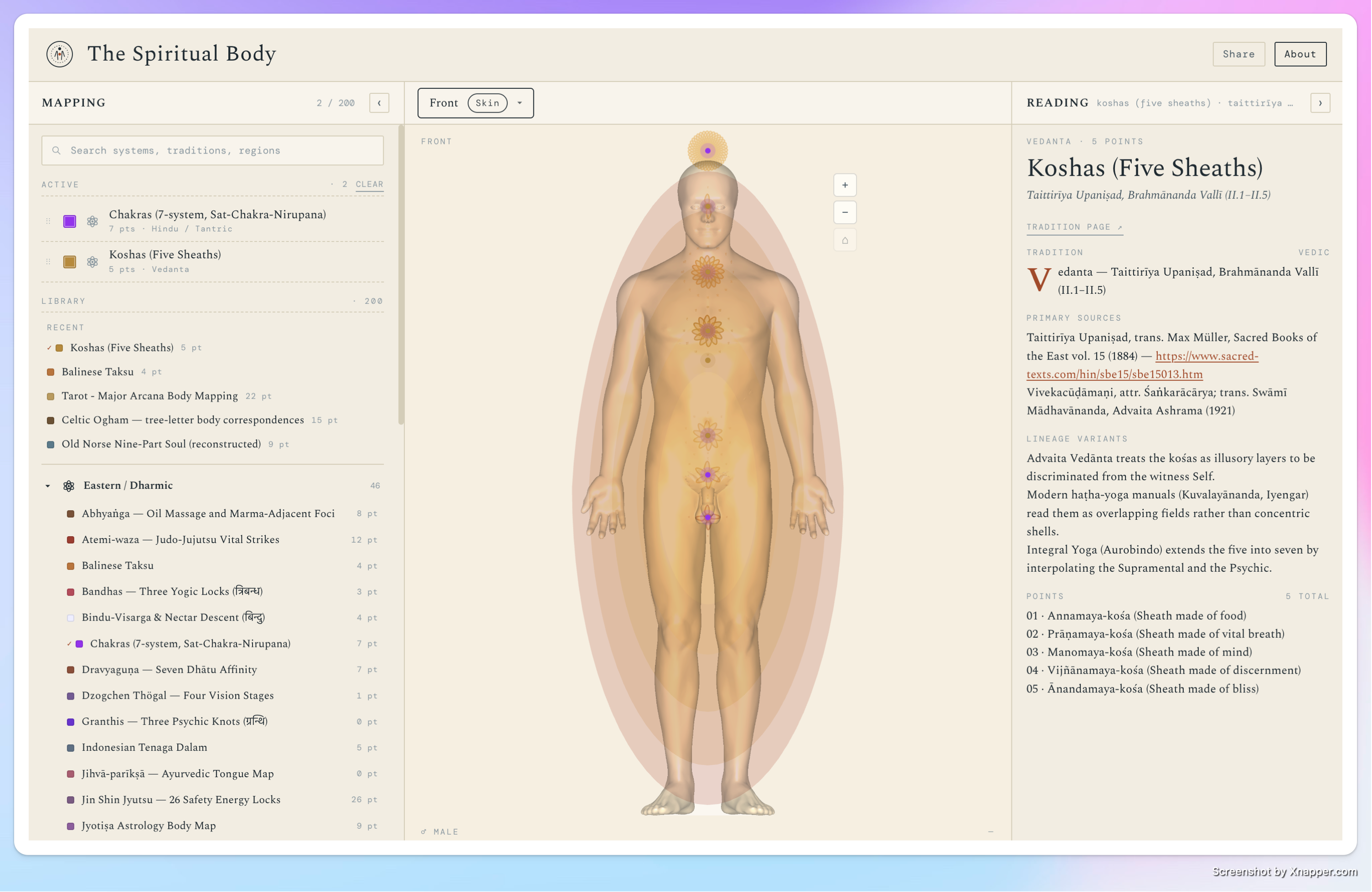
The Spiritual Body interface mapping a body through layers, traditions, and points
Spiritual systemsA single body can be mapped through many layers, centers, and relationships.From thespiritualbody.latentwill.com
◆ KINAMIX / REPRESENTATIONS// language as interface04 / 16
Map / territory

The Map Is Not the Territory

A word like TREE is a tiny symbolic pointer toward an enormous field of perceptual, emotional, ecological, and conceptual relationships.

Human example
“Earthy.” “Sweet.” “Like cinnamon.”

Useful descriptions can point toward a taste, but they never reproduce the experience.

The bandwidth problem
One prompt cannot carry the whole field.

We now use LLMs to write prompts for other LLMs because specifying what we want in language takes too much time.

Watercolor tree with an expansive canopy and visible roots
◆ KINAMIX / REPRESENTATIONS// words in relation05 / 16
Latent space is structured

A field of relationships.

Concepts do not live in homogeneous soup. Directions, clusters, hierarchies, manifolds, and relationships emerge during training.

◆ KINAMIX / REPRESENTATIONS// diffusion side context06 / 16
Next section

DSCI: Diffusion Side Context Injection

Textual Inversion style embeddings for Diffusion Transformer Models

◆ KINAMIX / REPRESENTATIONS// ways to teach a model07 / 16
Stable Diffusion

Teach the Model, Patch the Model, Point Into It

Fine-tune
MODEL
train entire model
Change the whole model.
LoRA
MODEL
train patch
Change a small part.
Embedding
MODEL
find area
train representation
Point into what the model already knows.
A strange watercolor landscape with luminous rifts and celestial forms
◆ KINAMIX / REPRESENTATIONS// representation access08 / 16
DSCI

Bypass the narrator.

DSCI skips the Vision Language Model and injects learned embedding guidance directly into the Diffusion Transformer.
An otherworldly figure writing with an oversized quill at a desk
Conventional route
PROMPTtext instruction
Vision Language Modelparse / align
Diffusion Transformergenerate

Prompt → Vision Language Model → Diffusion Transformer. Language is the control surface.

DSCI route · direct injection
PROMPTtext instruction
EMBEDDING GUIDANCEinject directly into DiT
Diffusion Transformerconditioned generation

Prompt → Diffusion Transformer. The VLM is skipped; learned guidance enters the DiT directly.

◆ KINAMIX / REPRESENTATIONS// examples in practice09 / 16
DSCI / Examples

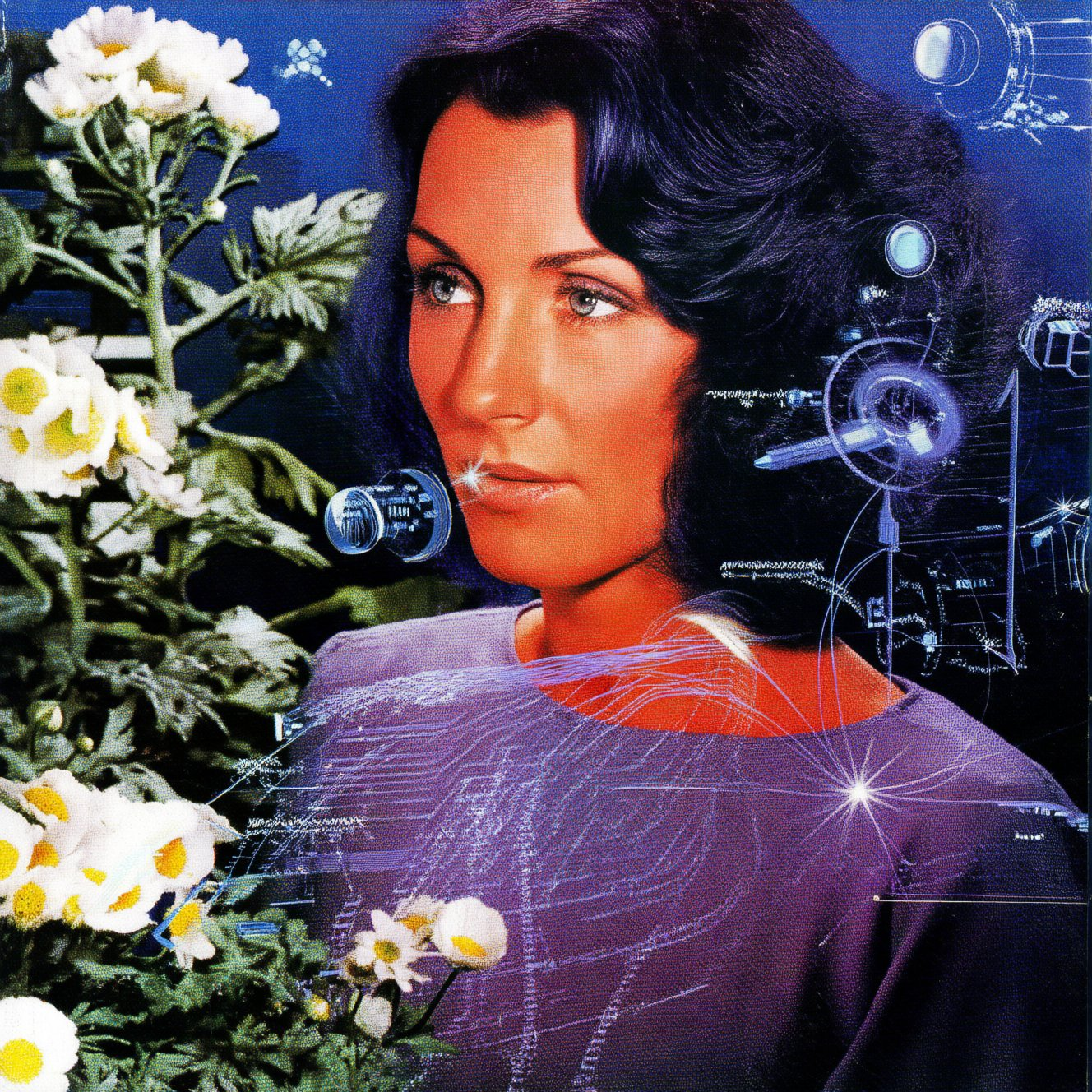
Representation in practice.

The prompt can stay simple while the representation carries the direction.
◆ KINAMIX / REPRESENTATIONS// resonant embedding guidance10 / 16
Next section

REG: Resonant Embedding Guidance

Navigating the latent space of GemmaDiffusion LLMs
An intricate arrangement of laboratory glassware and experimental equipment
◆ KINAMIX / REPRESENTATIONS// continuation engine11 / 16
Papañca at 200 tokens / second

The autoregressive mind.

Generation commits left to right. Each output becomes context for the next output—and the model continually elaborates on its own elaboration.
Autoregressive · one token at a time
Themodelwritesonewordatatime,thenlooksbackandrewriteswhatithasalreadyplaced.
Next-token probabilitiesschematic
given contextstart of sentence
next tokenThe
Thehigh
Amedium
Thislow
A branching path splitting into two directions through intertwined trees
◆ KINAMIX / REPRESENTATIONS// from continuation to resolution12 / 16
Discrete text diffusion

Diffusion LLMs — what if the answer emerged to fit the space?

The whole answer takes shape at once

Every position sharpens together across a discrete token canvas.
Diffusion · whole-canvas revision
Themodelbeginswitheverypositionblurred,thensharpensallofthematonce,refiningtheentirecanvasinparallel,untilthefulltextsettlesintoplace.
Conceptual change: resolution can use the whole canvas as context while it revises.
An expansive watercolor cloud with flowing layered forms
◆ KINAMIX / REPRESENTATIONS// resonant embedding guidance13 / 16
REG / Resonant Embedding Guidance

Guidance without instruction.

Instead of explaining the desired register, style, or behaviour with more language, inject a learned vector-level signal into generation.

promptcontent in words
REG signallearned direction
DiffusionGemmasame base model
shifted languagequalities emerge
Describe the direction

“Be peaceful, gentle, merciful, impartial.”

A longer instruction still asks language to specify the target.

Provide the direction

vREG → denoising-time guidance

The current native path keeps the discrete token canvas and adds a separate logit-guidance signal.

A pile of rolled scrolls, maps, and sealed documents
◆ KINAMIX / REPRESENTATIONS// examples in language14 / 16
REG / Examples

Guidance Beyond the Prompt

Words specify the task. Embeddings shape the response.

◆ KINAMIX / REPRESENTATIONS// information vs direction15 / 16
Two control paths

REG vs RAG.

One answers what the model needs to know. The other asks which way the model should move.

RAG · knowledge

What does the model need to know?

retrieveexternal information
tokeniseconvert information to context
generatecondition on added tokens
REG · direction

Which way should the model move?

learna representation / vector
injectguidance at the control boundary
alterthe path of generation
RAG adds information.   REG adds direction.
◆ KINAMIX / REPRESENTATIONS// contact16 / 16
Stay in touch

Edward Kennedy

Scan to visit latentwill.com/presentations/embeddingsCTScan to viewlatentwill.com/presentations/
embeddingsCT
1 / 16
KINAMIX